
March 12 – As geopolitical tensions continue to grip the world in uncertainty, senior officials at FIFA say postponing the 2026 FIFA World Cup is not a realistic option, even as the governing body continues to monitor the conflict involving Iran and its potential impact on the tournament.
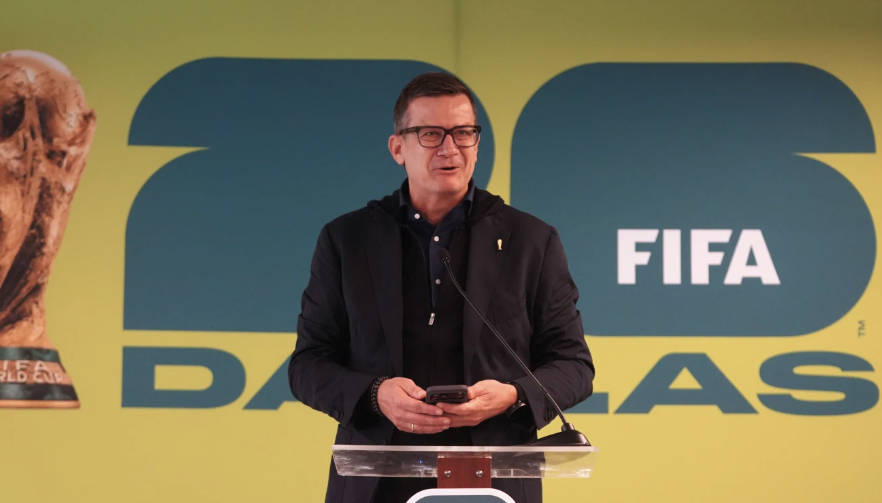
Speaking at the International Broadcast Centre for the 48-nation competition, FIFA World Cup Chief Operating Officer Heimo Schirgi said the scale and complexity of the tournament make any delay extraordinarily difficult.
“If I had a crystal ball I could tell you now what is going to happen, but obviously the situation is developing,” Schirgi said. “It’s changing day by day and we are monitoring closely.
“We’re working together with all our federal partners and also our international partners in evaluating the situation, and we basically take it day-by-day and at some stage we will have a resolution. And the World Cup will go on, obviously, right? The World Cup is too big, and we hope that everyone can participate that has qualified.”
The comments highlight the immense logistical and financial implications of postponing a World Cup.
A modern example of those ripple effects came during the COVID-19 pandemic, when the 2020 Summer Olympics in Tokyo were postponed by a year. The delay forced costly renegotiations with broadcasters, sponsors, and venues while dramatically increasing operational costs for organizers and host authorities.
When the games did resume, the cost had roughly doubled to $13 billion, and the Organising Committee lost $800 million in ticket sales.
Against that backdrop, FIFA’s approach has been to closely monitor global developments while continuing preparations as planned.
Schirgi said the organisation remains in regular contact with the Football Federation Islamic Republic of Iran but declined to provide details about those discussions.
“Given the state of the world today, this will be a great opportunity to bring everyone together,” Schirgi said. “For you who have not experienced the World Cup, the World Cup is very special because it’s truly global and it brings everybody together. We witnessed that in Qatar, in Russia, everywhere. People were amazed how international this whole thing is.”
Schirgi also addressed FIFA’s recent decision to introduce an additional 48-hour window for ticket sales, a move designed to help fans who had previously been unsuccessful in securing seats.
“It was basically giving an opportunity to fans who have applied and were not successful for tickets in their category to offer them a different category of tickets,” Schirgi said.
“So if you have applied for a category three ticket for a specific match and you haven’t got it because we don’t have enough category three tickets, we offered those people because they applied early — we said, instead of having a category three ticket, would you like a category two ticket?”
With global tensions continuing to evolve, FIFA will nervously await further developments from the Middle East and hope that the conflict does not spill any further onto the world map.
Contact the writer of this story, Nick Webster, at [email protected]