
October 21 – Nottingham Forest have turned to Sean Dyche to steady the ship, with the 54-year-old signing a two-year contract running until 2027.
The former Burnley and Everton boss will be the club’s third head coach of an already chaotic season, replacing Ange Postecoglou, whose 39-day spell ended after Saturday’s 3-0 defeat to Chelsea.
Postecoglou departed winless from eight games, leaving Forest 18th in the Premier League and searching for direction both domestically and in Europe.
The club have revealed that Dyche, out of work since leaving Everton in January, will be in the dugout for Thursday’s Europa League clash against Porto – and they hope it won’t take long for him to implement his no-nonsense style of play.
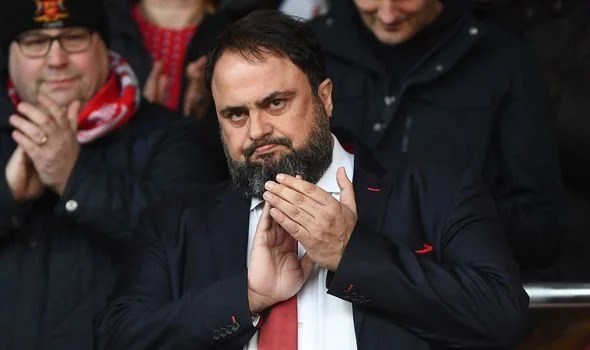
The appointment follows another high-speed managerial search led by global head of football Edu Gaspar and technical director George Syrianos, under the ever-present eye of owner Evangelos Marinakis.
The Greek businessman, whose enthusiasm often spills out on to the pitch, has presided over a revolving door of head coaches since taking control of the club.
Forest’s hierarchy also considered Roberto Mancini and Fulham’s Marco Silva.
The club said in a statement that Dyche brings “the perfect blend of character, tactical acumen and proven achievement to guide the club through its next chapter.”
Dyche’s coaching team will include familiar faces Ian Woan and Steve Stone, both former Forest players and long-time assistants, as the new manager seeks to restore some stability to a side that has lost its way.
A former Forest youth player himself, Dyche inherits a squad built for European competition but struggling for cohesion.
Marinakis’s impatience for results has been both a blessing and a burden for Forest: his ambition and investment lifted the club back into Europe, but his quick and hot-headed dismissals have threatened continuity.
Dyche’s arrival feels like a last attempt to steady the club before the season’s early damage becomes irreversible.
Forest’s chaotic campaign has already undone much of last year’s progress under Nuno Espírito Santo, who guided the club to seventh and back into Europe for the first time in two decades.
Postecoglou’s short-lived experiment with expansive football was meant to modernise that foundation – instead, it completely unravelled under pressure.
For now, Dyche represents a return to basics, even if it’s not pretty.
His success will depend not only on what happens on the pitch, but also on whether Marinakis and the board can finally find the patience to let a project breathe.
Contact the writer of this story, Harry Ewing, at [email protected]