
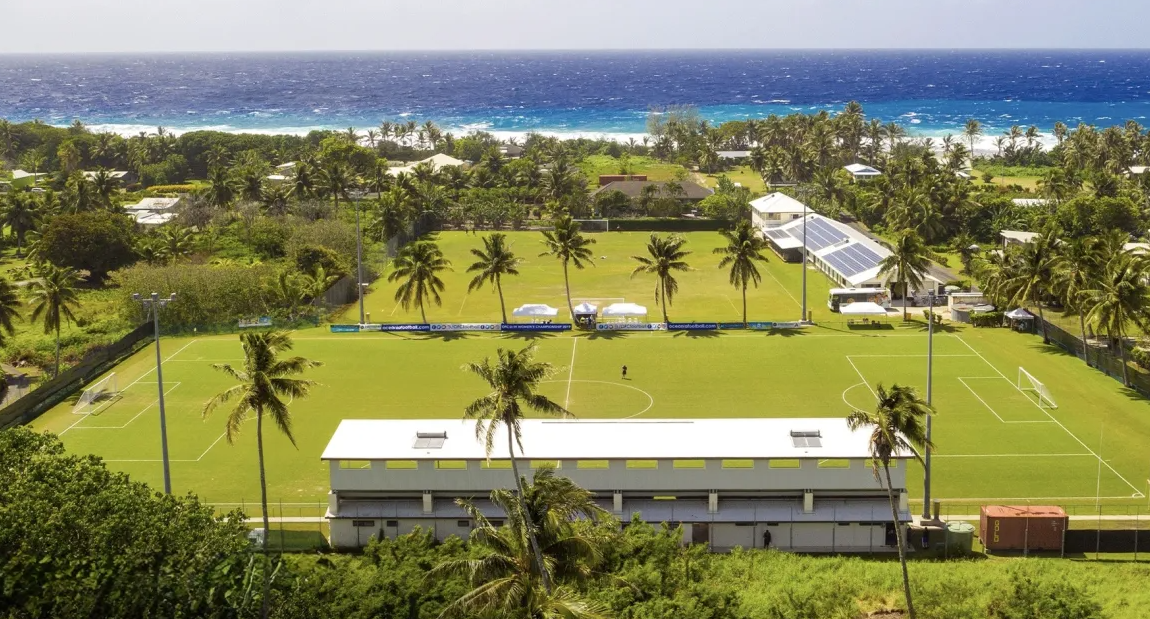
December 16 – The Oceania Football Confederation (OFC) has become the first continental association to become a Sports for Nature Signatory, marking a commitment to create and sustain healthy natural environments across Oceania.
A joint initiative of the International Union for Conservation of Nature, International Olympic Committee, United Nations Environment Programme, Secretariat of the Convention on Biological Diversity and Dona Bertarelli Philanthropy – the Sports for Nature Framework boasts four principles:
- Protect nature and avoid damage to natural habitats
- Restore and regenerate nature wherever possible
- Understand and reduce risks to nature in supply chains
- Educate and inspire positive action for nature across and beyond sport
“OFC has joined the Sports for Nature framework because it believes in the power of football to enhance the wellbeing of people and communities across Oceania. It also understands that this wellbeing is dependent upon the wellbeing of our environments,” the OFC website explained.
“OFC has a responsibility to avoid harm and proactively protect the environments in which we live and play our game. Aligning with the Sports for Nature framework and working with their network enhances our ability to drive measurable action through football.”
“Joining the Sports for Nature framework is an incredible opportunity to access resources, communities, and knowledge that will enhance OFC’s commitment to building a Resilient Oceania,” added Dr Teeny Aiken, OFC’s Head of Social Responsibility.
“Football is a platform for positive environmental action across the region, and collaborating with Sports for Nature ensures that our game contributes to sustaining our natural environments. A collective effort between OFC, MAs, communities, and environmental experts is necessary to generate positive and sustainable impact.”
The Pacific Island nations of Oceania are disproportionately affected by climate change, with weather patterns driven by the El Niño-Southern Oscillation (ENSO) which effects rainfall, cyclone frequency and other natural disasters – which is set to get more dramatic as the climate crises accelerates.
Contact the writer of this story, Stuart Dick, at [email protected]