
June 4 – A new study has claimed that fan travel will account for almost 90% of the carbon footprint generated by the 2026 FIFA World Cup, raising fresh questions about the environmental cost of football’s ever-expanding global showpiece.
The report, published by carbon accounting platform Greenly, estimates that this summer’s tournament across North America could generate 7.8 million tonnes of CO₂ equivalent emissions – more than double the 3.7 million tonnes officially reported for Qatar 2022.
Environmental scrutiny around major sporting events usually focuses on stadium construction and infrastructure projects – a real issue surrounding the Qatar tournament – though Greenly’s analysis suggests the biggest challenge facing FIFA lies elsewhere.
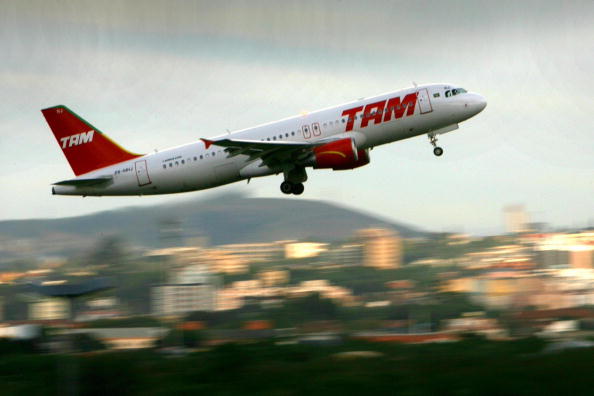
According to the report, 87% of the tournament’s total emissions will come from spectator travel, generating an estimated 6.82 million tonnes of CO₂e. That figure alone is equivalent to the annual carbon footprint of approximately 725,000 people.
Part of this is a result of FIFA’s decision to make it the largest World Cup in history – featuring an expanded roster of 48 teams and 104 matches, 40 more matches than in Qatar four years ago.
Instead of the single-city Doha hosting (with the exception of Lusail), games will be staged across 16 host cities in three different countries, prompting a significant jump in travel carbon emissions.
Alexis Normand, co-founder of Greenly, stressed how the report highlights where football’s sustainability efforts should be focused.
“Major global events such as the FIFA World Cup are an opportunity to remind ourselves that the celebration of sport cannot come at the expense of other pressing global challenges,” said Normand.
“On the contrary, they can serve as powerful catalysts for greater awareness of their climate impact, and help drive investment into more sustainable infrastructure, from electrified transport and rail networks to low-carbon stadiums and better-organised spectator mobility.”
The report argues that international travel is the primary driver behind the tournament’s projected emissions. Although overseas supporters are expected to account for only 35% of total attendances, they are projected to generate 74% of all travel-related emissions.
Across all international visitors, the average round trip is projected to cover approximately 19,400 kilometres, substantially more than the average distance travelled by supporters attending Qatar 2022.
“Our analysis shows that nearly 90% of the estimated emissions associated with the 2026 FIFA World Cup will come from spectator travel,” Normand added.
“That is where the greatest opportunity for change lies: hosting events in denser, better-connected regions, reducing travel distances, and making sustainability a genuine criterion in the selection of host locations.”
Interestingly, the report notes that some of the environmental criticisms directed at Qatar 2022 are less relevant for the 2026 tournament. Seven new stadiums were built for the World Cup in Qatar, meaning infrastructure accounted for nearly a quarter of the competition’s total footprint.
By contrast, next summer’s tournament will largely utilise existing NFL and major sports venues, reducing infrastructure-related emissions to an estimated 3.1%. It will also not have the human rights headache from stadium construction in Qatar – but that is a different story.
The findings also place renewed attention on FIFA’s climate commitments. The governing body pledged at COP26 to reduce emissions by 50% by 2030 and achieve net-zero emissions by 2040 under the UN Sports for Climate Action Framework. That said, Greenly notes that FIFA has yet to publish an updated overall emissions estimate for the expanded 104-match tournament.
Contact the writer of this story, Harry Ewing, at [email protected]