
By Harry Ewing
November 3 – When EA Sports split from FIFA in 2022, it was framed by many as a risky move – a divorce that could destabilise one of gaming’s most recognisable franchises. Two years later, that decision looks increasingly like a masterstroke.
The freedom gained from stepping out of FIFA’s shadow – and its increasingly expensive licensing demands – has allowed EA to reinvent not just its football simulation series but its entire esports ecosystem, which has become a vast collection of events attracting more attention than ever before.
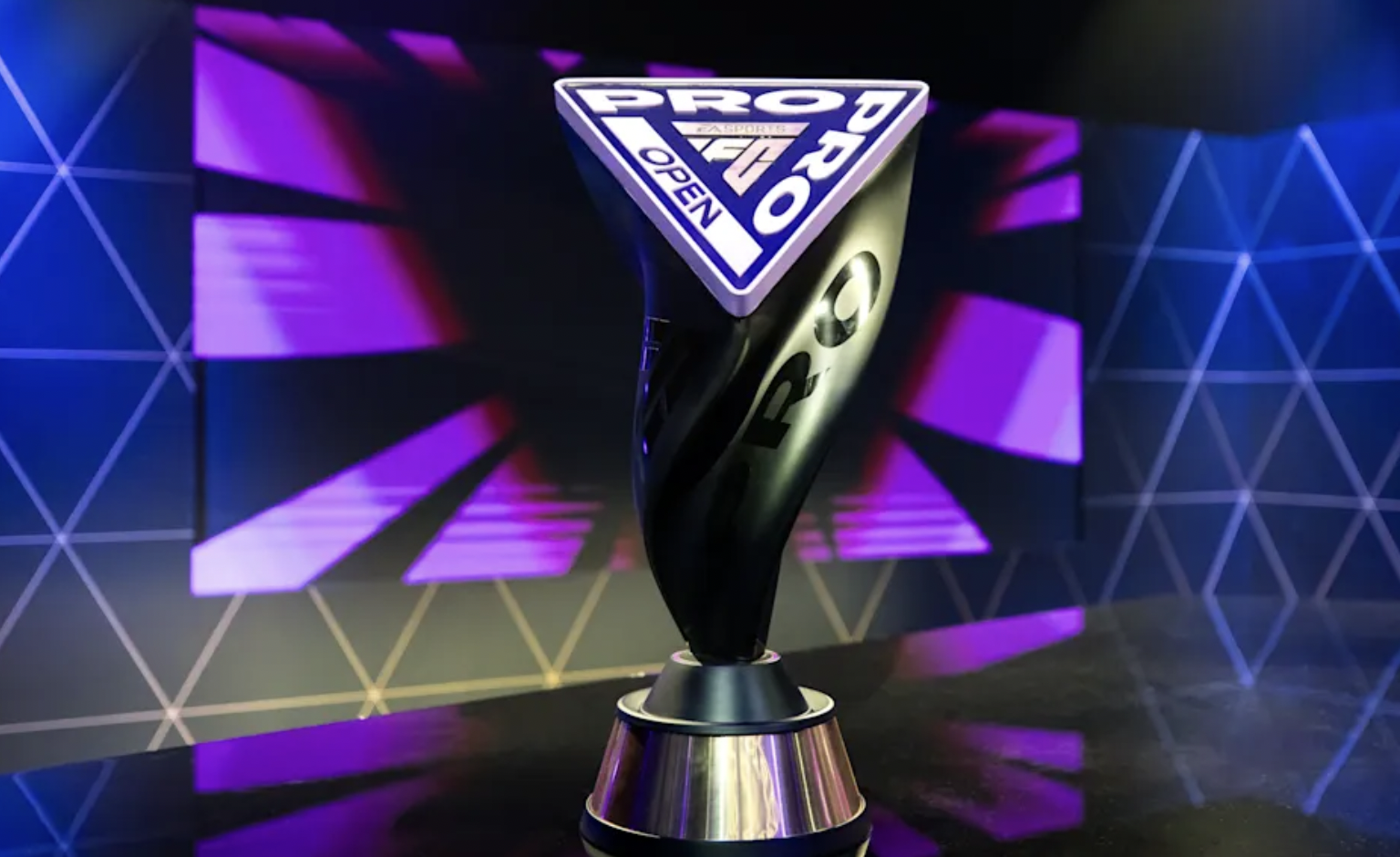
Nowhere is that more evident than in FC Pro, EA Sports’ flagship competitive gaming circuit, which is split into three distinct sections – Qualifiers, Open and Championship.
What began in 2023 with modest FC Pro Open qualifiers at London’s Troubadour Studios has since grown far beyond that North London debut, with the same early stage of the competition this time being played at DreamHack Atlanta – one of the biggest gaming conventions on the planet.
“The split gave us the space to build things our way,” said Monica Dinsmore, EA’s Head of Esports, when she sat down for an exclusive interview with Insideworldfootball at the event on Sunday.
“For the launch of FC Pro in 2023, we were able to control the entire programme for the first time. That way, it’s a lot simpler and easier to understand.
“We can customise specific times for audiences to pay attention and have a more linear path for fans to follow – everything leads up to the championships, which are EA-owned for the first time.”
That structural shift has been fundamental. For years, the competitive landscape was scattered across third-party tournaments and licensing restrictions. Now, EA owns the entire ecosystem – from qualification to championship – and it shows.
“It makes much more sense from a sports perspective,” Dinsmore continues. “Fans can follow the story through different parts of the season, and it all builds up to this amazing season-ender at the championships, just like on the real pitch.”
When FC Pro’s first qualifiers were staged at the Troubadour in London – a small, theatre-style studio with barely a few hundred seats – it provided a proof of concept. Two years later, the move to DreamHack Atlanta, and the 50,000-strong footfall that comes with it, signals something much bigger: scale, ambition, and legitimacy.
“Back then, it was about establishing a foundation,” Dinsmore said. “Now, it’s about showing that esports is not a side project. It’s a growing, evolving, global platform that fans genuinely care about.”
Part of that success has come from blurring the lines between the EA Sports FC video game and its competitive ecosystem. Through in-game integration – including rewards for watching live tournaments – fans have been able to earn digital items for tuning in. It’s a subtle but powerful hook for younger audiences already native to online engagement.
The ‘Pro Open Qualifiers’ stage of EA’s circuit is designed to give opportunities to players we’ve never heard of – and potentially unearth the next great esports star in the process.
“We are making sure that we are giving fans what they want,” says Dinsmore. “Making the competitions interesting and exciting – and the concept of ‘couch-to-champion’ is such a unique and special part of EA’s esports programme. Our ecosystem is particularly competitive and exciting – it was just the last tournament where we saw a major upset in the final, and we love to see those stories.”
What’s become increasingly clear is that esports is not simply a digital add-on to football – it’s becoming a gateway.
“A ceiling for esports? No way — the sky is the limit,” said Dinsmore. “Gaming and esports are increasingly becoming an introductory vehicle for kids to discover football, which is why everyone should start to care and pay attention to gaming and esports.
“These kids know more about the game, about the players and how to play football before they even step foot on the real pitch. That’s why gaming and esports are integral to reaching the next generation of football fans.”
For Dinsmore, the separation from FIFA also came with a personal shift. After years of working within a heavily structured licensing framework, she now finds herself empowered to help shape EA’s long-term strategy – and as head of esports since January, she’s in the perfect place to do so.
“I’ve always been positioned strategically within the team, but now it feels like I have a lot more agency,” she says. “I can now help the team more with strategic direction – and I’m really excited to see things taking shape with this new structure.
“At EA we’re always evolving with the industry. Through listening to our community, we’ve made some really great additions to our programme – I’m super proud of all the work we’ve been doing behind the scenes.”
If FIFA represented football’s licensed universe, EA Sports FC – and by extension FC Pro – represents freedom. After losing FIFA’s institution and corporate branding, the new model is tighter, more coherent, and more fan-focused than ever.
The experiment in a small London studio has now grown into a global calendar event, integrated seamlessly into the largest gaming event on the planet. And if Dinsmore is right, this is only the beginning.
“Esports has no ceiling,” she re-iterated with conviction. “The sky really is the limit.”
Contact the writer of this story, Harry Ewing, at [email protected]