
By David Gold
June 6 – Brazil’s President Dilma Rousseff has finally signed the controversial 2014 World Cup law, bringing to an end the wrangling over its content.
The country’s Congress had disputed the precise content of the law for the 2014 World Cup, particularly relating to the sale and consumption of alcohol in stadiums.
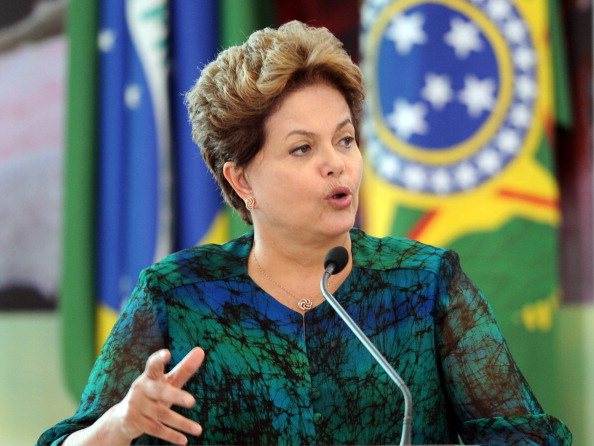
That is prohibited in Brazil, but the law signed by Rousseff (pictured above) has lifted that rule to comply with the agreements made with FIFA when they agreed to stage the World Cup back in 2007.
In addition, the law dictates that 300,000 tickets to be sold at half price – about R$100 (£32/$50/€40) – to senior citizens and students.
It also addressed the granting of visas to those visiting for the competition, while another provision requires schools to adjust their calendars for the period of the World Cup.
Rousseff’s signature was the final stage of the law, which had gone through the Brazilian Upper and Lower Houses of Parliament earlier this year.
Its slow progress brought with it numerous political problems, not least a public row with FIFA general secretary Jérôme Valcke.
He was forced to apologise after suggesting Brazil 2014 needed a “kick up the backside” for the slow progress of preparations for the World Cup, including the passage of the law.
He made his first visit to Brazil since those comments, made in March, last week.
Environmental campaigners also attempted to use the passage of the law to extract concessions over a separate Bill concerning deforestation.
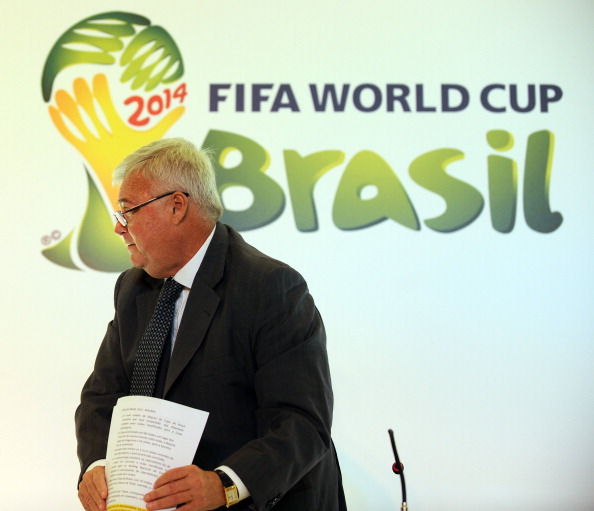
Progress sped up following the departure of Brazil’s controversial former football chief, Ricardo Teixeira (pictured above), in March.
He had enjoyed an increasingly strained relationship with both FIFA and the Brazilian Government in the final months of his reign in charge of both Brazil 2014 and the Brazilian Football Confederation (CBF).
He was subsequently replaced as the head of both by José Maria Marin.
Contact the writer of this story at [email protected]
Related stories
May 2012: FIFA’s Jérôme Valcke makes first trip to Brazil since “Bagshot blunder”
May 2012: Brazil Senate approves contentious 2014 World Cup law
May 2012: Brazil 2014 and FIFA agree a truce
May 2012: Brazil 2014 and Government officials to hold breakthrough talks with FIFA President
April 2012: Brazil has done harder things than the World Cup, says country’s Sports Minister