
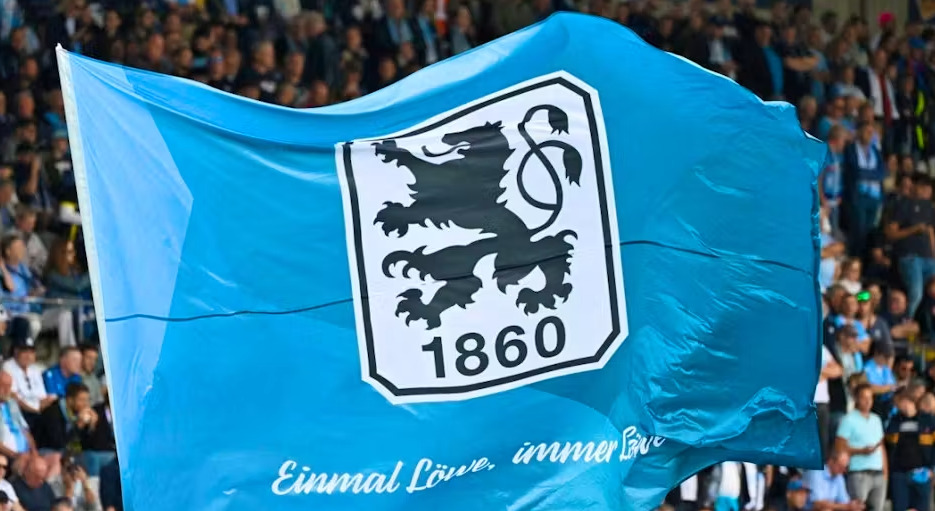
June 4 – German club TSV 1860 Munich are facing one of the darkest moments in their 165-year history having been denied a licence to compete in the 3. Liga next season.
According to reports from German newspaper Bild, the club failed to provide the financial guarantees required by the German Football Association (DFB), including proof of approximately €2.7 million in funding needed to secure a licence for the 2026-27 campaign.
The decision results in 1860 being relegated to the Regionalliga despite finishing eighth in the 3. Liga, a remarkable collapse for a club that, on the pitch at least, appeared to be moving in the right direction.
The situation has also placed renewed focus on majority shareholder Hasan Ismaik, whose future involvement could prove critical. Reports suggest the club will still need to secure around €1 million simply to compete in the Regionalliga. Failure to do so could push 1860 towards insolvency proceedings.
Only a few months ago, discussions around the club centred on whether they could mount a push for promotion back to the 2. Bundesliga. Attendances were healthy, fan engagement was strong and there was little outward indication of a crisis severe enough to threaten the club’s existence.
Instead, 1860 now find themselves confronting an existential challenge that has become all too familiar in modern football: strong support on the terraces does not always translate into financial stability behind the scenes.
The timing is particularly striking given events earlier this year, when 1860 supporters openly mocked Bayern Munich during local celebrations. While the gulf between the two clubs has been vast for decades, 1860 have always maintained a proud identity and a sizeable fanbase despite spending recent years outside Germany’s top divisions.
Their decline began in earnest following relegation from the Bundesliga in 2004. Since then, financial problems, ownership disputes and sporting setbacks have repeatedly derailed attempts to return to former glories.
Bayern supporters will undoubtedly point to the contrasting fortunes of the two clubs. But beyond the tribalism lies a more uncomfortable reality: football is poorer when historic clubs disappear.
Contact the writer of this story, Harry Ewing, at [email protected]