
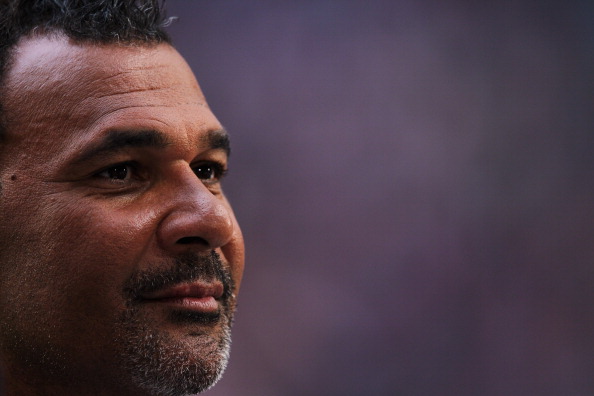
November 13 – For most footballers, retirement marks the end of the roar, the crowds, and the competition. For Dutch legend Ruud Gullit, it marked the start of something else entirely – a second career rooted in esports.
The former Ballon d’Or winner, who captained the Netherlands to their only major international title at EURO 1988, has quietly become one of the most recognisable names in the virtual football world through Team Gullit – an esports organisation he co-founded that has since gone on to win two World Cups and a Champions League in EA Sports FC competition.
“It’s funny,” Gullit said in an interview with Video Gamer [available here]. “I never expected it to be this big. When we started, my management wanted to make an avatar of me for the game. I thought, okay, why not?
“We went to Cologne for the launch, never expecting how popular it would become. Now, everyone wants to play with me in the game. It’s like a second career — the young players never saw me play, but when they see my card, they go to YouTube and watch my highlights. Then they realise, ‘Hey, he wasn’t that bad!’”
That digital resurrection has turned Gullit into one of the most sought-after icons in EA Sports FC (formerly FIFA), where his “Ultimate Team” card remains a fixture in competitive play.
It’s a curious twist for a player known for both quality and versatility in equal measure. “I think my cards are good because I played so many positions – right winger, striker, midfielder, central defender,” he said. “You can see that in the game. I can do everything.”
Team Gullit was born almost by accident, through a friend who played regularly with Formula 1 star Max Verstappen. “He said, ‘Why don’t we do this?’ So we did. I didn’t play myself, but I helped promote it and supported the players,” Gullit explains. “It’s a different world, but it’s competitive. We won the World Cup twice and the Champions League. Every year, we’ve had players in the finals.”
The project’s success has coincided with a broader shift in how football’s biggest names interact with gaming and digital culture. Gullit sees esports as a bridge to younger audiences — a space where the next generation experiences football in its own language.
“I’ve been to esports training camps, and it’s incredible how serious it’s become,” he says. “If you want to reach young people today, this is how you do it. They don’t watch TV anymore — they stream everything. So if you can connect through gaming, that’s how you stay part of their world.”
While Gullit has no plans to start a streaming channel of his own, his influence in the esports space remains significant. Team Gullit – which has since been sold to global esports organisation Team Liquid – had become a recognised pathway for elite competitive gamers, continues to bridge eras between the real and the virtual.
Contact the writer of this story, Harry Ewing, at [email protected]