
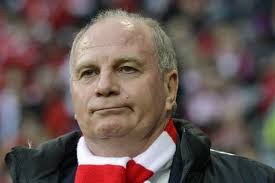
December 2 – Uli Hoeneß has urged FIFA and UEFA to “finally” impose meaningful financial controls across elite football, warning that Bayern Munich – long seen as a model of sustainability – can no longer keep pace with the spending power of state-backed and multi-club giants.
In a typically fiery appearance at the Sport Marke Medien congress in Munich, Bayern’s honorary President said the game is drifting into an unsustainable financial order and called on the governing bodies to restore competitive balance.
“The associations would have to put an end to this limitless game,” Hoeneß said. “They have to make sure that something like financial fair play comes up at some point. It can’t go on like this!”
Hoeneß argued that without enforceable regulation, clubs like Bayern are left competing against financial structures they cannot match. “If we don’t identify new sources of money, we won’t have a chance against Dubai, Abu Dhabi or the Fenways – they’re all not stupid,” he said.
His frustration extended to Gianni Infantino’s push for expanded competitions, which he described as symptomatic of a system chasing more matches rather than sustainability. “He can only have developed this idea during his last visit to Donald Trump. He can’t play with Australia, New Zealand or Fiji. If everyone came together, we would quickly come to better solutions.”
Hoeneß also delivered a pointed message to Bayern’s own supporter groups, particularly the club’s ultras, whom he believes are obstructing necessary financial evolution. “Our ultras drive me crazy with their eternal demands,” he said, calling them “two, three thousand active troublemakers” who must decide: “Do they want to celebrate themselves and make theatre – the atmosphere in the stadiums is incredible – or do they want to be internationally successful?”
“If they take over, it’s all over!” he warned, insisting the Bundesliga must be allowed to open up to investors if it intends to remain competitive.
The 73-year-old then broadened his critique to domestic politics, arguing that Germany’s challenges extend far beyond football. “We must finally bring our country forward. The country must prosper again. The country must once again be number one in Europe,” he said, attacking the former coalition government. Chancellor Friedrich Merz, he conceded, had exceeded expectations: “I don’t think his work is that bad.”
But Hoeneß’s central message was aimed squarely at Nyon and Zurich: without genuine, enforceable FFP, the sport’s financial divide will continue to widen – and even Bayern Munich, the juggernaut of German football, will struggle to stay on level ground.
Contact the writer of this story, Harry Ewing, at [email protected]